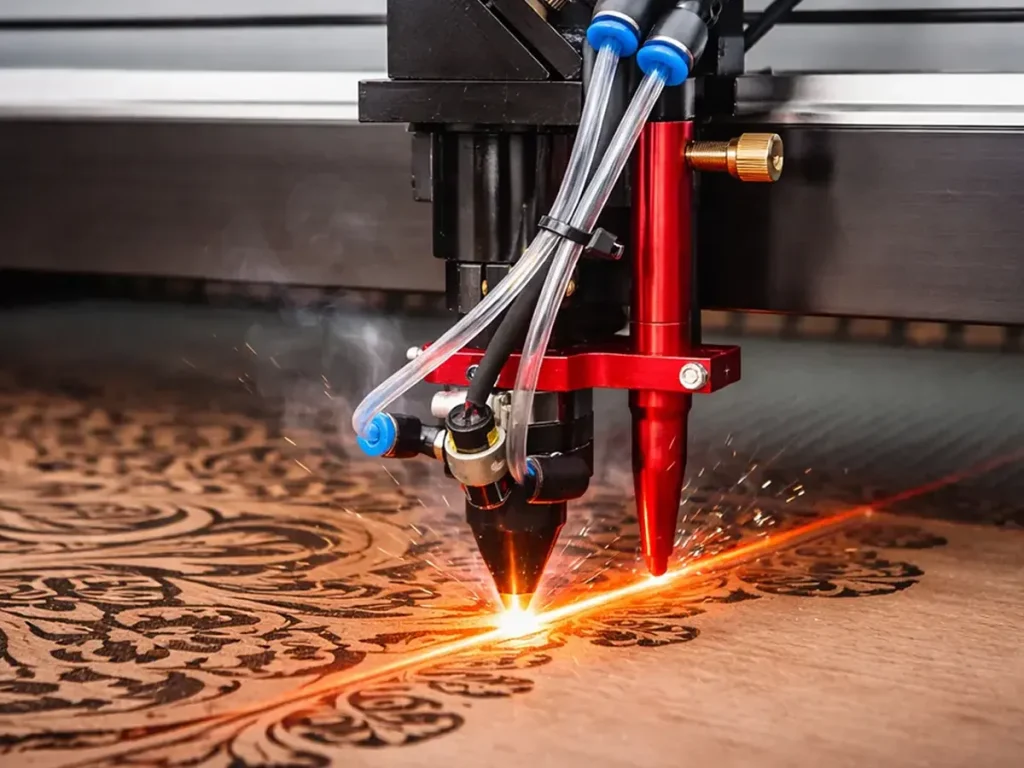
A milling tool is a cutting tool with a cylindrical shape, featuring cutting edges on its circumference and bottom, which performs rotational motion to cut and machine workpieces.
The milling tool family is very extensive. Together with hole-making tools (drills, reamers, taps, boring tools, etc.), they cover almost all commonly used processing tools on CNC wood router machines.
Types of Milling Tools
Milling tools can be classified into various categories based on different criteria. Below are several classification methods commonly used in the industry:
Classification by Number of Cutting Edges
- Single edge: Offers large chip space and low cutting resistance, suitable for cutting acrylic, non-ferrous metals (e.g., aluminum), and softwoods. It minimizes reduces cutting noise, but surface finish is slightly inferior.
- Double edge: The most balanced option. It combines chip evacuation capability and surface finish, making it the most commonly used type in wood processing, applicable for both roughing and finishing.
- Three or more edges: Provides smaller chip space but allows higher feed per revolution, resulting in the best surface finish. Primarily used for finishing.
Classification by Blade Installation Method
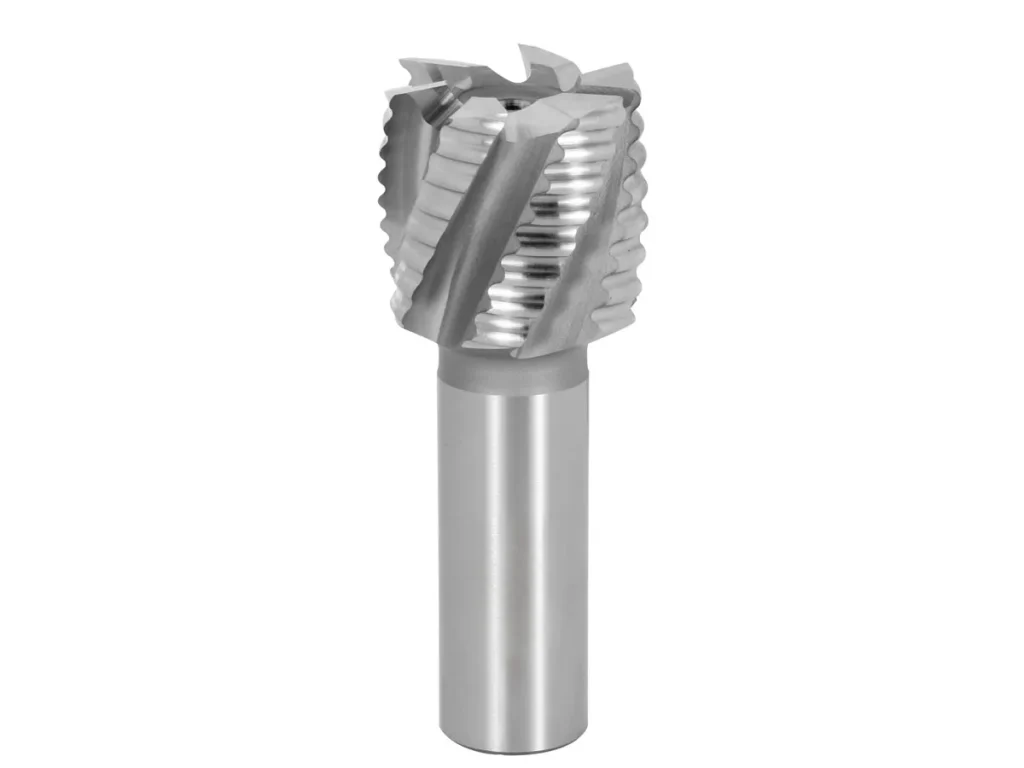
- Solid milling tool: The shank, tool body, and cutting part are made or welded from the same material (typically carbide or high-speed steel), forming an inseparable whole. The integrated structure avoids minor runout, enabling extremely high machining accuracy and surface finish. The drawback is that the entire tool is discarded after wear (though regrinding is possible, it is difficult to restore the original precision)
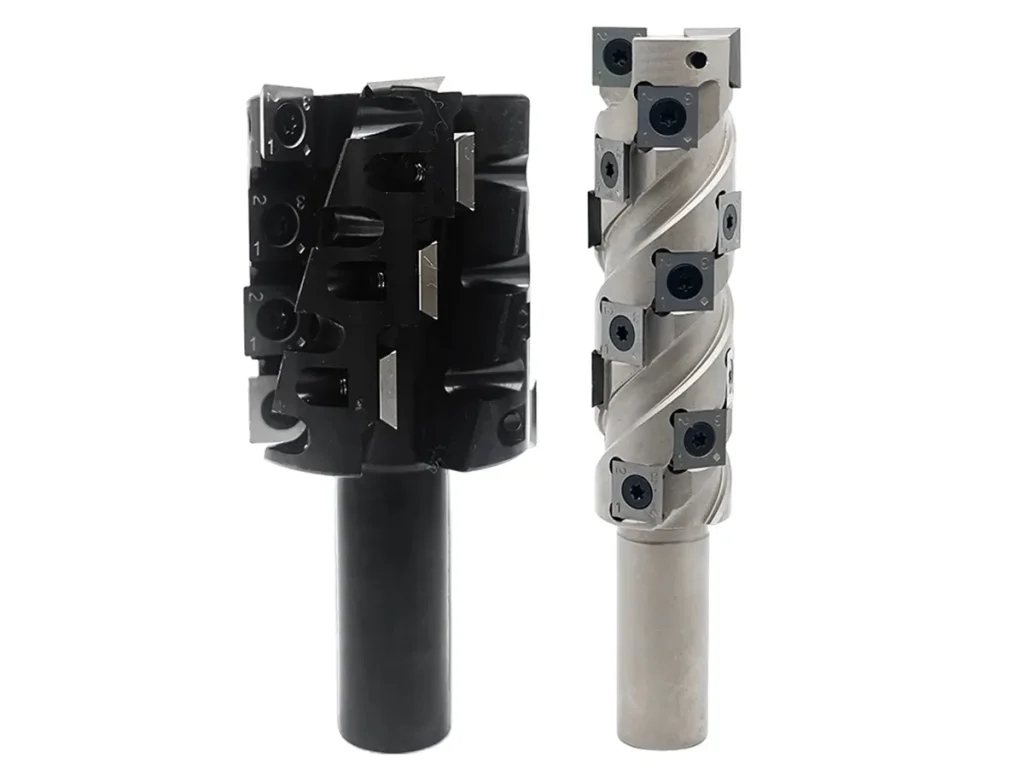
Indexable milling tool: Consists of a steel tool body and indexable inserts secured mechanically. Designed for heavy-duty roughing, it allows strategies with large cutting depths and high feed rates. The tool body holds multiple inserts, usually polygonal (e.g., square, triangular, round), with each insert typically having multiple cutting edges. The inserts are consumables, low-cost, and can be indexed to a new edge or replaced individually when dull, while the tool body is reused permanently, significantly reducing tool costs. Common applications in woodworking include heavy roughing of solid wood and other materials, such as face milling tools and pineapple cutters (a type of multi-edge roughing tool).
How to Select Milling Tools?
Now, let’s return to the main topic of this article: How to choose milling tools for wood router machines?
- Material
- Carbide: The absolute mainstream and preferred choice. Modern CNC wood router almost exclusively uses solid carbide milling tools. It offers the best balance of hardness, wear resistance, and toughness, ensuring long service life and suitability for all woodworking materials, including solid wood, engineered wood, and composites.
- High-speed steel (HSS): Largely obsolete. Its hardness, wear resistance, and lifespan are far inferior to carbide. It is only used in manual or low-end equipment and cannot meet the high-speed and efficiency requirements of CNC router.
- Polycrystalline diamond (PCD): Designed for extremely wear-resistant materials. Specifically used for processing highly abrasive materials, such as composite boards containing large amounts of resin, fireproof boards, and aluminum-plastic panels. The adhesives and additives in these materials can rapidly wear down carbide tools, whereas PCD tools offer exceptionally long life but are very expensive.
- Coating
- Uncoated: Sufficient for most wood processing applications.
- Coatings (such as TiN): Can reduce the coefficient of friction, enhance wear resistance, and improve chip evacuation performance. Suitable for processing sticky materials or situations where longer tool life is desired.
- Shank diameterConfirm the collet specification (ER specification) supported by your engraving machine, and then select the appropriate milling tool shank diameter (ISO specification) based on the collet specification.
- TypeThe selection of milling tool type requires comprehensive consideration of multiple factors, including the material category, material condition, geometric shape, and processing technology of the workpiece to be machined.The relationship between processing technology and milling tool type has been detailed in the previous introduction to milling tool types and will not be repeated here. Below, the focus is on the relationship between the material to be processed and milling tool selection:
- Softwoods (e.g., pine, fir): High cutting resistance necessitates the use of double-edge tools to ensure sufficient chip space and prevent burning. The cutting edges must be sharp.
- Hardwoods (e.g., oak, walnut): High cutting resistance necessitates the use of double-edge tools to ensure sufficient chip space and prevent burning. The cutting edges must be sharp.
- Engineered wood (e.g., MDF, particle board): Highly abrasive (especially surfaces coated with melamine), which rapidly wears down tools. Wear-resistant carbide tools, commonly double-edge, are essential.
- Composite materials (e.g., carbon fiber board, G10): Extremely abrasive. Specialized milling tools designed for composites (often featuring unique edge angles and coatings, such as PCD edges) must be used. Standard woodworking tools will fail almost instantly.